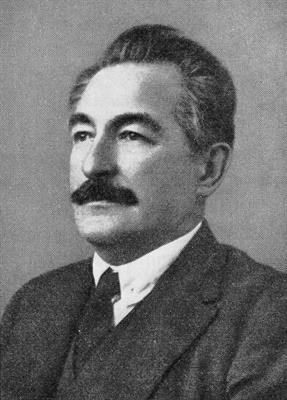
Dr. Dr. h. c. Emmerich Zederbauer
Personalia
Born:
Died:
Profession:
Persecution:
Imprisonment March 12, 1938 – April 2, 1938,
Dachau Concentration Camp April 2, 1938 – September 20, 1938,
Release May 31, 1938
KZ Number:
Memberships
Curriculum Vitae
After graduating from high school in St. Pölten, Emmerich Zederbauer began studying botany in Vienna and, after earning his doctorate in 1903, embarked on a career in science. That same year, he married Henriette, née Holzleitner.
In 1912, he earned his habilitation in systematic botany at the University of Natural Resources and Life Sciences in Vienna. At the Chair of Fruit Growing and Horticulture, newly established in 1921, he initially taught as an associate professor and, beginning in 1924, as a full professor. With his *Handbook of Fruit Growing*, he laid the foundations for the new discipline and contributed significantly to the advancement of this field of study. In 1937, he was named an honorary member of the Nibelungia Vienna and Plug Vienna student fraternities.
As rector of the University of Natural Resources and Life Sciences for the 1937–38 academic year, he was arrested by the Gestapo on March 12, 1938—the very day Austria was occupied by the German Wehrmacht—and deported to the Dachau concentration camp on April 2, 1938, as part of the so-called “Prominententransport.”
Rector and Professor Dr. Emmerich Zederbauer, who was still able to leave the university unhindered on the morning of March 12, 1938, was arrested upon arriving home, sent to the Dachau concentration camp for hard labor, and released only after half a year as a man broken both physically and mentally. Prof. Zederbauer still suffers so severely from the consequences of this treatment that, as far as can be reasonably expected, he will never be able to resume his teaching duties.
Emmerich Zederbauer was removed from office on March 14, 1938, and dismissed through forced retirement effective May 31, 1938. His family was “provided for” with the subsistence minimum of 140 Reichsmarks. In response to a letter of appeal from his wife Henriette, the acting director of the university, Franz Sekera (1899–1955), wrote: “For traitors to the German cause, 140 RM is too much.”
His wife, Henriette, collected letters of support from students, graduates, and former Nazis among their circle of acquaintances in an effort to secure his release from prison. On July 31, 1938, she submitted a petition to that effect. Sekera also advocated for his release in a letter dated August 10, 1938, addressed to Heinrich Welsch (1888–1976), the Attorney General and Special Representative of the Reich Ministry of Justice.
“I hereby recommend that Prof. Dr. Emmerich Zederbauer be granted a leave of absence from custody to allow him to visit his seriously ill wife in Vienna.”
After his release from prison on September 20, 1938, Emmerich Zederbauer remained under strict surveillance by Nazi officials and was required to report to the police once a week. On July 18, 1939, he was interrogated again by the Gestapo.
Following the liberation of Austria and the restoration of the Republic in April and May 1945, respectively, Emmerich Zederbauer was fully rehabilitated and was able to resume his teaching position at the University of Natural Resources and Life Sciences. He became a member of the Franco-Bavaria fraternity in Vienna. After being awarded an honorary doctorate by the University of Natural Resources and Life Sciences in 1945, he continued to lead a secluded life until his death in 1950. He is buried at the cemetery in Vienna-Grinzing.
Citations
Krause, Peter/Reinelt, Herbert/Schmitt, Helmut (2020): Farbe tragen, Farbe bekennen. Katholische Korporierte in Widerstand und Verfolgung. Teil 2. Kuhl, Manfred (ÖVfStG, Wien) S. 397/398.