Ferdinand Graf
Personalia
Born:
Died:
Profession:
Persecution:
Imprisonment March 13, 1938 – May 24, 1938,
Dachau Concentration Camp May 24, 1938 – September 27, 1939,
Flossenbürg Concentration Camp September 27, 1939 – March 2, 1940,
Dachau Concentration Camp March 2, 1940 – August 17, 1940,
Penal Company from 1941 onward
KZ Number:
Honors:
Grand Silver Medal of Honor with Star for Services to the Republic of Austria
Grand Gold Medal of Honor on Ribbon for Services to the Republic of Austria
Memberships
Curriculum Vitae
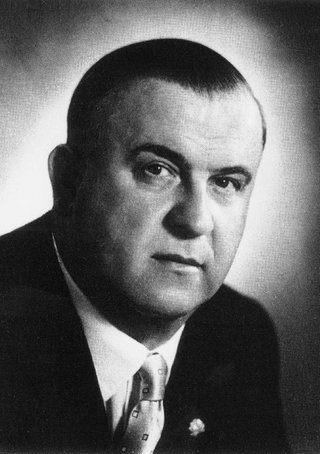
Ferdinand Josef Graf was born in Klagenfurt as the legitimate son of the shoemaker Ferdinand Graf and his wife Hildegard, née Slapnig. After elementary school, he attended the Gymnasium in Klagenfurt. In 1923, he joined the Karantania Klagenfurt high school fraternity. Later, he transferred to the Higher Federal Technical School for Electrical Engineering in Graz, where he graduated from high school.
He then began studying at the Faculty of Law and Political Science at the University of Graz, but did not complete his degree. In the 1920s, he became active in the Christian Social Party (CSP). In 1930, he became secretary and, in 1933, director of the Carinthian Farmers’ Union, as well as an official of the Fatherland Front. In 1930, he married Marianne Gröblacher.
Following the occupation of Austria by the German Wehrmacht on March 12, 1938, he was arrested by the Gestapo as early as March 13, 1938, and deported to the Dachau concentration camp on May 24, 1938. Since the Dachau concentration camp was temporarily cleared for the SS following Hitler’s Germany’s invasion of Poland, he was transferred to the Flossenbürg concentration camp on September 27, 1939. He was returned to the Dachau concentration camp on March 2, 1940. He was released on August 17, 1940. In 1941, he was drafted into the German Wehrmacht, where he was forced to serve in a penal company. From 1943 to 1945, he worked as a payroll clerk for a construction company.
After the war, Ferdinand Graf returned to politics. In 1945, he became director of the newly founded Austrian Farmers’ Union, a position he held until his death. He was active in the newly founded Austrian People’s Party (ÖVP) and the ÖVP Association of the Politically Persecuted and Defenders of Austria. After holding various political offices as a member of the National Council and the Federal Council, he was appointed State Secretary in the Federal Ministry of the Interior and, from 1956 to 1961, served as the first Federal Minister of National Defense of the newly established ministry.
He died at the age of 62 and was laid to rest at the cemetery in Vienna-Neustift am Walde.
Places
Persecution:
Residence:
Citations
Wiener Stadt- und Landesarchiv (WStLA)
Krause, Peter/Reinelt, Herbert/Schmitt, Helmut (2020): Farbe tragen, Farbe bekennen. Katholische Korporierte in Widerstand und Verfolgung. Teil 2. Kuhl, Manfred (ÖVfStG, Wien) S. 99/100.
Matricula Online
Friedhöfe Wien - Verstorbenensuche