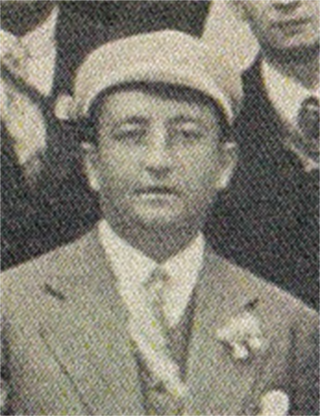
DI Engelbert Dworak
Personalia
Born:
Died:
Profession:
Persecution:
Imprisonment March 13, 1938 – April 2, 1938,
Dachau Concentration Camp April 2, 1938 – April 22, 1939
KZ Number:
Honors:
Grand Decoration of Honor for Services to the Republic of Austria
Memberships
Curriculum Vitae
Engelbert Dworak graduated from secondary school and then began studying agriculture at the University of Natural Resources and Life Sciences in 1919, graduating in 1925 with a degree in agricultural engineering (Dipl.-Ing. (agr.)). In 1919, he initially joined the Nordgau Wien fraternity, but then resigned along with four other members “due to injustices suffered” and transferred to the Danubia fraternity. A reconciliation took place later, and he subsequently became an honorary member of Nordgau.
After completing his training, he worked as secretary of the district farmers’ chamber, first in Gföhl and then in Hollabrunn from 1927 to 1933. From 1935 to 1937, he was a member of the Lower Austrian State School Board. He served on the Hollabrunn municipal council for the CSP from 1932 to 1933. During this time, he was named an honorary member of the Arminia Hollabrunn secondary school alumni association.
From 1933 to 1937, he served as regional director of the VF in Lower Austria, and in 1937 as deputy secretary-general of the VF. From 1937 to 1938, he served on the State Council.
Following the occupation of Austria by the Third Reich, he was arrested and, on April 1, 1938, was transported to the Dachau concentration camp as prisoner No. 95 on the Gestapo list as part of the first transport of Austrians—the so-called “prominent figures’ transport”—where he was held until April 22, 1939. During his time in the concentration camp, his family was supported by members of the Arminia and Danubia fraternities. After his release, he remained under Gestapo supervision. In August 1939, he found employment as a laborer in a sauerkraut factory, and in 1940, he became head of the commission department at the Kolben-Kraus company.
After the war, he began working as managing director of the Austrian Grain and Brewing Industry Association, then became a partner at Dr. Barta & Co. in Vienna, and from 1951 onward worked in the cooperative audit department of the Chamber of Agriculture for Vienna and Lower Austria. From 1945 to 1949, he served as a member of the state parliament and as a municipal councilor for the ÖVP in Vienna.
He died in Vienna in 1953 as a result of illnesses he had contracted in a concentration camp.
Citations
Krause, Peter/Reinelt, Herbert/Schmitt, Helmut (2020): Farbe tragen, Farbe bekennen. Katholische Korporierte in Widerstand und Verfolgung. Teil 2. Kuhl, Manfred (ÖVfStG, Wien) S. 57.
ÖVP Kameradschaft der politisch Verfolgten und Bekenner für Österreich