DI Max Leitner
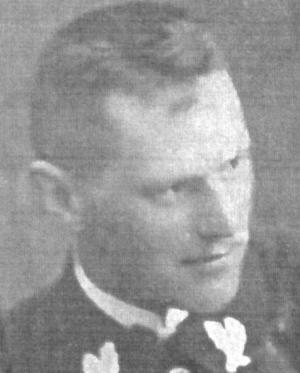
Personalia
Born:
Died:
Profession:
Persecution:
Driven to suicide by the Nazis on September 14, 1938
Memberships
Curriculum Vitae
Max Leitner was born the son of a forester who died young. Thanks to his mother’s self-sacrifice, Max Leitner was able to graduate from the high school in Ried im Innkreis in 1903 and subsequently began studying forestry at the University of Natural Resources and Life Sciences in Vienna (Dipl.-Ing., 1910), where he joined the Kürnberg fraternity. While still a student, he worked as a forestry engineer in South Bohemia.
After completing his studies, Leitner became a forestry inspector at the Cistercian Abbey of Hohenfurth in South Bohemia (Vyšší Brod). At the outbreak of World War I, he was drafted into the Austro-Hungarian Army and served primarily on the Italian front. In 1918, he was taken prisoner by the Italians and did not return until the fall of 1919. He then joined the forestry service of the Premonstratensian Abbey of Schlägl in the western Mühlviertel region. There, he switched the timber transport from waterways to trucks.
In 1929, Max Leitner took over management of the Starhemberg estates with the title of General Director. However, he only half-heartedly supported Ernst Rüdiger Starhemberg’s Heimwehr policy, as he was primarily aligned with the Christian Social Party. Under Starhemberg—and to some extent already in Schlägl—Max Leitner earned an outstanding reputation in professional circles through his dedication and was regarded as an excellent economic expert. This led to his appointment in 1934 as a representative of agriculture to the Estates-based State Parliament of Upper Austria, a position he held from November 1, 1934, to March 12, 1938. In 1936, he also became vice president of the Chamber of Agriculture.
Following the Anschluss in March 1938, he was subjected to investigations, interrogations, restrictions on his freedom of movement, suspension of benefits, and eviction from his home. His mental breakdown was followed by a physical one; Max Leitner committed suicide.
He was buried in the cemetery in Aigen-Schlägl.
Places
Residence:
Citations
Biolex des ÖCV uter www.oecv.at/biolex; Stand: 27.09.2022.