DDr. Felix Romanik
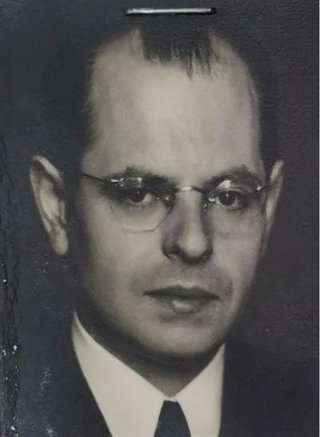
Personalia
Born:
Died:
Profession:
Persecution:
released in 1938,
resistance fighter (undetected)
Memberships
Curriculum Vitae
Nothing is known about Felix Romanik’s childhood and youth. He joined the secondary school fraternity Ostaricia in Vienna in 1927 and, as a college student, the student fraternity Bajuvaria in 1928. In 1929, he also became a member of the secondary school fraternity Vindobona II.
Before 1938, Felix Romanik held a professorship at the TGM and was a lecturer at the University of International Trade in Vienna.
On March 12, 1938, he witnessed the downfall of a free and independent Austria with the invasion of the German Wehrmacht. He was removed from government service on the grounds of being politically unreliable.
As early as the fall of 1938, he joined the resistance group led by Karl Meithner, a professor of international trade, along with his fraternity brothers Max Gererstorfer and Hans Dorrek. This conservative group of academics collaborated with the Communist group led by Paul Antl, the district chairman of the Communist Party. They collected donations for victims of the Nazis, and their attempts to free friends from concentration camps were partially successful. Around the turn of the year 1939–40, the Meithner group was exposed. Felix Romanik, however, is not discovered because he had in the meantime been drafted into the Wehrmacht. He is promoted to war administration inspector but is later demoted again due to contacts with Croatian resistance circles and transferred as a disciplinary measure to Silesia. There, he comes into contact with French prisoners of war and Polish civilian workers, whose escape preparations he supports. A disciplinary investigation against him is quashed, but it results in yet another demotion and, in October 1944, a punitive transfer to the Waffen-SS in Graz. There, he engages in underground activities within Luftgau and Wehrkreis XVII without being detected. He reestablishes contact with his fraternity brother Max Gererstorfer, and the two continue their underground activities in Luftgau and Wehrkreis XVII undetected.
In Vienna, Felix Romanik witnessed the liberation of Austria and the reestablishment of the Republic in April and May 1945, respectively. He was rehabilitated and returned to work as a teacher. In 1953, he was admitted to the Order of the Holy Sepulcher of Jerusalem (OESSH). He subsequently became a member of the secondary school fraternities Leopoldina Gmünd, Vindobona I, and Herulia Vienna, as well as the student fraternity Mercuria.
Felix Romanik retired from teaching and died at the age of 66. He was laid to rest at the cemetery in Vienna-Lainz.
Places
Residence:
Citations
- Fritz, Herbert/Krause, Peter (2013): Farbe tragen, Farbe bekennen 1938–45. Katholische Korporierte in Widerstand und Verfolgung. (ÖVfStG, 2013), p. 494.
Archiv Ritterorden vom heiligen Grab zu Jerusalem (OESSH)
Friedhöfe Wien - Verstorbenensuche