Universitätsprofessor Dr. Wilhelm Koppers SVD
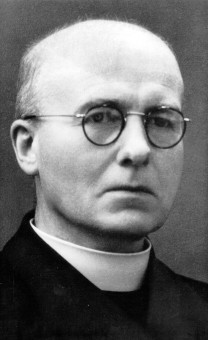
Personalia
Born:
Died:
Profession:
Persecution:
Release: May 28, 1938,
Escape: June 17, 1938
Honors:
Silver Medal of Honor from the Federal Capital of Vienna (posthumous)
Memberships
Curriculum Vitae
Wilhelm Koppers was born in North Rhine-Westphalia, Germany, the legitimate son of day laborer Wilhelm Koppers and his wife Christina, née Bienemann. After elementary school, he received private instruction in Latin and French in 1899, before entering the mission house of the Society of the Divine Word (SVD) in Steyl near Venlo, the Netherlands, in 1901 at the age of 15, where he graduated from the order’s high school. He then continued his education at the St. Gabriel Mission House near Mödling in Lower Austria and was ordained a priest in 1911. He subsequently studied for one year at the Pontifical Collegium Angelicum and at the Biblical Institute in Rome. Beginning in 1913, he served on the editorial board of the ethnological-linguistic journal *Anthropos* and, from 1914 to 1917, studied anthropology and ethnography at the University of Vienna under Rudolf Pöch, Indology under Leopold von Schroeder, and general linguistics under Paul Kretschmer. In June 1917, he received his Dr. phil. degree under Rudolf Pöch with the dissertation “Ethnological Economic Research: A Historical-Critical Study.”
Wilhelm Koppers’s first research expedition took him to Tierra del Fuego in 1921–22, where he and his confrere Martin Gusinde, SVD, lived among the Yámana (also known as the Yagan) in a coming-of-age ceremony and a rite of passage for adult men, and were accepted into this indigenous tribe as the first Europeans to do so. The publication of his research findings—particularly the insights into the spiritual life of the Yámana—suddenly brought him and Martin Gusinde international recognition as ethnologists. In 1924, he earned his habilitation at the University of Vienna with a thesis on economic ethnology; he became an Austrian citizen that same year and was appointed associate professor of ethnology in 1928.
When the Institute of Ethnology was founded at the University of Vienna in 1929, Wilhelm Koppers took over as its director and was appointed full professor in early 1935. He transformed the institute into one of the most important centers of ethnology in Europe, where, among others, future professors such as Clyde Kluckhohn, Masao Oka, Douglas L. Oliver, and Helmut Petri studied until 1938. He was one of the initiators of the first International Congress of Anthropology and Ethnology in London in 1934, served on its Permanent Council, and was one of the vice presidents of the International Union of Anthropological and Ethnological Sciences from 1934 to 1961.
Wilhelm Koppers was a staunch opponent of National Socialism and also played a role in the dismissal of National Socialist university assistants, such as Fritz Flor. He was also in close contact with other opponents of National Socialism, such as Franz J. Kirschbaum, SVD, Josef Schröteler, SJ, and Alois Closs.
Beginning in 1929, Wilhelm Koppers distinguished himself with research on the religious history of the Indo-Europeans, in which he drew on the linguistic theories of Otto Schrader, who located the origin of the Indo-Europeans in the steppes of southern Russia. In his 1936 study *Horse Sacrifices and the Horse Cult of the Indo-Europeans*, he reinforces the so-called “Eastern Thesis” and thus makes a contribution from an ethnological perspective against the völkisch-Nazi claim that the Aryans originated in Northern Europe.
In addition, Wilhelm Koppers opposes Hanns Hörbiger’s “World Ice Theory,” viewing it as “absurd” and “erroneous.” “His theories, however, boil down to racial theories (Blubo = blood and soil!),” he wrote to Friedrich Funder on March 22, 1935, “and in a form that leaves virtually nothing of Christianity remaining.”
On March 12, 1938, Wilhelm Koppers witnessed the downfall of free and independent Austria with the invasion of the German Wehrmacht. His apartment at the Marienanstalt FDC and the mission house in Mödling were searched by the Gestapo. As early as April 22, 1938, he was placed on leave from the University of Vienna and dismissed on May 28, 1938, through forced retirement.
Koppers is a member of the mission house near Mödling. During a search of the premises following the upheaval, highly incriminating material—both political (legitimist) and moral (pornographic)—was found there, casting a harsh light on the spirit that prevails among the missionaries there.
Koppers himself is an abstract scholar whose theories are widely rejected by experts in his field (ethnology).
In terms of character, Koppers is a highly unsympathetic schemer whom all Nationalists viewed with the utmost suspicion due to his connections to the government. His anti-German attitude is well known and has also influenced his scholarship (anti-German ethnology).
On June 17, 1938, Wilhelm Koppers used a trip to the Order’s college in Rome as an opportunity to flee. There, he was given the opportunity to undertake a research trip to India lasting several months, with study stays in France, Belgium, the Netherlands, and Great Britain. The Rockefeller Foundation (RF) funded this research trip. From London, he traveled on the SS California to Bombay on October 1, 1938, and reached his destination on October 21, 1938.
With the outbreak of World War II on September 1, 1939, all male German citizens were interned. Wilhelm Koppers was admitted to the “Central Internment Camp Ahmednagar” on September 17, 1939, but was released as early as October 17, 1939. On December 18, 1939, he traveled by ship to Rome and from there, in January 1940, to Froideville in Switzerland, where he analyzed and published his field research material from Central India at the Anthropos Institute.
While in Switzerland, Wilhelm Koppers witnessed the liberation of Austria and the reestablishment of the Republic in April and May 1945, respectively. As early as July 1945, he received word that he had been reinstated as a university professor. He returned to Vienna and, on December 17, 1945, resumed his professorship and the directorship of the Institute of Ethnology.
Wilhelm Koppers joins the newly founded Austrian People's Party (ÖVP) and the ÖVP Association of the Politically Persecuted and Defenders of Austria.
In 1949, Wilhelm Koppers publishes his most significant monograph, *Der Urmensch und seine Weltanschauung* (Primitive Man and His Worldview). The work combines findings from his field research with questions regarding human origins and primordial monotheism. The significance of the book, which is translated into five languages, lies in its theologically informed approach, which views humans as endowed with religion, language, and culture from the very beginning. Building on the biological approaches of Adolf Portmann, he rejects both radical Darwinism and Lucien Lévy-Bruhl’s theory of “prelogical thought” in primitive man.

Wilhelm Koppers retired in 1957 but continued to work at the institute afterward. He died in Vienna at the age of 74 and was laid to rest at the cemetery of the St. Gabriel Mission House in Maria Enzersdorf near Vienna.
Places
Residence:
Citations
Wiener Stadt- und Landesarchiv (WStLA)
Rohrbacher, Peter (2022): Völkerkunde zur NS-Zeit aus Wien (1938-1945). Band III. Pater Wilhelm Koppers’ Exilzeit 1938–1945 (Wien) S. 1489-1529.
Deutsche Biographie unter www.deutsche-biographie.de/gnd116339012.html#dbocontent
Wikipedia unter de.wikipedia.org/wiki/Wilhelm_Koppers
Biographische Datenbank von Utz Maas unter zflprojekte.de/sprachforscher-im-exil/index.php
Friedhöfe Wien - Verstorbenensuche
