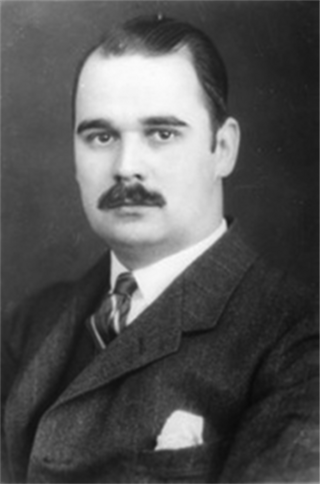
Dr. Maximilian Karl Franz Michael Hubert Anton Ignatius Joseph Maria (Max) Herzog von Hohenberg
Personalia
Born:
Died:
Profession:
Persecution:
Imprisonment March 14, 1938 – March 31, 1938,
Dachau Concentration Camp March 31, 1938 – September 24, 1938
Memberships
Curriculum Vitae
Maximilian was the eldest son of the heir to the throne, Archduke Franz Ferdinand, and his wife, Countess Sophie Chotek, Duchess of Hohenberg. After the assassination of his parents in 1914, he and his siblings were placed in the care of his maternal aunt, Henriette Countess Chotek. After graduating from the Schottengymnasium in Vienna, he studied law and earned his doctorate in law (Dr. iuris) in Graz in 1926. That same year, he married Elisabeth Bona, Countess of Waldburg zu Wolfegg and Waldsee, and became a member of the Sovereign Order of the Knights of Malta (SMRO). He then worked as a lawyer and managed his parents’ estates.
A staunch opponent of National Socialism, he spoke out in the 1930s—together with his brother Ernst, Prince of Hohenberg—in favor of Austrian independence and resisted the invasion by the German Wehrmacht. He maintained close contact with Otto von Habsburg-Lothringen. He served as honorary chairman of the legitimist umbrella organization Eiserner Ring.
On March 12, 1938, Max, Duke of Hohenberg, witnessed the downfall of a free and independent Austria with the invasion of the German Wehrmacht. On March 14, 1938, he and his brother were arrested by the Gestapo and deported individually to the Dachau concentration camp on March 31, 1938—even before the so-called “Prominententransport.” There—like his brother—he was primarily forced to clean latrines, which was a particularly humiliating task, but one that both endured with dignity. After his release on September 24, 1938, he was assigned to Artstetten Castle as a place of compulsory residence. His brother was transferred to Buchenwald concentration camp, from which he was released in 1943.
After liberation, the residents elected him mayor of Artstetten with the approval of the Soviet occupying power. He held the position for two five-year terms. In addition, for many years he served as Otto von Habsburg’s representative in the property negotiations between the House of Habsburg and the Austrian federal government. In 1958, Max Herzog von Hohenberg declared these talks a failure, as no compromise was in sight. Otto von Habsburg then commissioned him to negotiate with the government regarding the return of the Habsburgs. When the Austrian Constitutional Court ruled this out, he resigned from the position.
Maximilian died in Vienna in 1962 from the long-term effects of the abuse he suffered in the concentration camp and was buried in the Hohenberg family crypt at Artstetten Castle.
Places
Persecution:
Residence:
Honoring:
Citations
Fritz, Herbert/Krause, Peter (2013): Farbe tragen, Farbe bekennen 1938–45. Katholisch Korporierte in Widerstand und Verfolgung. (ÖVfStg, 2013) S. 339.
Wikipedia unter de.wikipedia.org/wiki/Maximilian_Hohenberg