Dr. Rudolf Seehofer
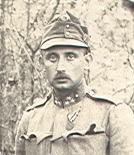
Personalia
Born:
Died:
Profession:
Persecution:
professional ban in 1938 or 1939
Memberships
Curriculum Vitae
Rudolf Seehofer was born to a couple who ran an inn. After elementary school, he attended the Jesuit college Kollegium Kalksburg near Vienna, where he earned his Matura in 1904. He then began his studies at the Faculty of Law at the University of Vienna, where he joined the Norica fraternity.
In early February 1915, Rudolf Seehofer was drafted into military service. He first served in a Landsturm battalion, then in the Austro-Hungarian Imperial and Royal Infantry Regiments Nos. 84 and 99. In 1917, he passed the officer’s examination. He sustained several wounds (his final rank was cadet aspirant).
After the war, Rudolf Seehofer did not immediately resume his studies but instead took a position as secretary of the Christian Social Party in the Leoben district. In the city of Leoben, he was elected to the municipal council. In 1919, he became secretary-general of the Christian Social Party of Styria and organized the election campaign for the National Council and Styrian state parliament elections held in the fall of 1920. He ran for office in these elections, was elected, and served in the Styrian State Parliament from 1920 to 1923. Rudolf Seehofer left politics in 1923 and did not run for the Styrian State Parliament again. In 1919, he was also one of the co-founders of the Lützow Leoben Secondary School Fraternity.
Rudolf Seehofer then devoted himself to completing his studies. In 1924, he passed the two remaining state examinations as well as the three comprehensive exams at the Faculty of Law of the University of Graz (Dr. iur. in 1925). After completing his studies, he served his judicial clerkship and then began his career as a lawyer. After working as a law clerk in Graz and Hartberg, he passed the bar exam in 1931 and opened a law practice in Wildon (Leibnitz district, Styria) in 1932.
From 1936 to 1938, Rudolf Seehofer served as district secretary of the Fatherland Front for the Leibnitz district. This is likely one of the reasons why, during the Nazi era, he was reported to the Bar Association by the Rechtswahrerbund and had to undergo a disciplinary investigation. A boycott was imposed on him (a professional ban), and he suffered a loss of assets. In mid-1943, he was conscripted into the State Insurance Agency.
After the war, he was rehabilitated and continued to practice law into his old age. He is buried in the cemetery in Wildon.
Citations
Biolex des ÖCV unter www.oecv.at/biolex; Stand: 14.10.2022.