Robert Franze
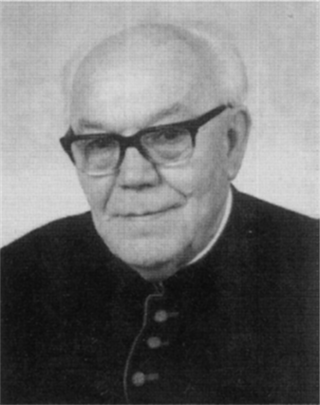
Personalia
Born:
Died:
Profession:
Persecution:
Imprisonment April 22, 1941 – late June 1941,
Sachsenhausen Concentration Camp late June 1941 – February 13, 1942,
Dachau Concentration Camp February 13, 1942 – June 4, 1942
KZ Number:
Memberships
Curriculum Vitae
Robert Franze was born in Nixdorf in the Lusatian Highlands. After graduating from high school, he began his theological training in Leitmeritz (Litomerice) and joined the Ferdinandea Prague fraternity in 1933.
After his ordination on June 16, 1935, he served in the Diocese of Leitmeritz as a curate in Neschwitz/Eibe and, finally, from 1942 until his expulsion, as parish priest (the last German priest) in Rosendorf [Ruzova] in the district of Tetschen.
Following the annexation of the Sudetenland as a result of the Munich Agreement in the fall of 1938, “friction” arose with the Nazis: at a funeral, the Nazi formation refused to march behind the cross; on Palm Sunday, the children were told to bring “at least a single twig,” which would not diminish the honey yield…
The Gestapo arrested Robert Franze on April 22, 1941, at the school and, following interrogations, informed him that he had to be placed in “protective custody” to avoid being lynched. In June 1941, Reinhard Heydrich had an arrest warrant served on him, citing as the reason for his arrest: “…because, through his statements, he had damaged the Party’s reputation and attempted to destroy the Third Reich.”
At the end of June, he was transferred via Dresden and Berlin to the Sachsenhausen concentration camp as part of a group transport. Initially housed in a barracks, he was moved to “solitary confinement” on February 3, 1942—for no apparent reason. A few days later, he was transferred to the Dachau concentration camp via Leipzig, Plauen, and Nuremberg. On June 4, 1942, he was unexpectedly released without any explanation, on the condition that he report to the Rosendorf municipal office for three months.
After his expulsion, Robert Franze took on new pastoral duties in the Diocese of Augsburg beginning September 1, 1946. The Swabian district of Günzburg [the Margraviate of Burgau in what was formerly Further Austria] became his new home. From 1967 to 1978, he served as parish priest in Burgau. Beginning in 1978, he served as pastor emeritus in Ichenhausen-Hochwang.
Places
Persecution:
Citations
Fritz, Herbert/Krause, Peter (2013): Farbe tragen, Farbe bekennen 1938–45. Katholisch Korporierte in Widerstand und Verfolgung. (ÖVfStg, 2013) S. 286.