Dr. Franz Virnich
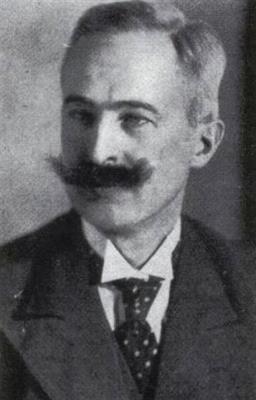
Personalia
Born:
Died:
Profession:
Persecution:
Fled in 1934,
Imprisoned May 21, 1940 – April 5, 1943,
Murdered on April 5, 1943
Memberships
Curriculum Vitae
Franz Virnich was the son of Dr. Karl Virnich, a Reichstag deputy from Zerrtrum and co-founder of the Austria Innsbruck fraternity. Franz was born in Bonn, initially attended high school there, and then transferred to the Jesuit boarding school “Stella Matutina” in Feldkirch, where he remained until 1899. After graduating from the agricultural school in Lüdinghausen (Westphalia) in 1902, he worked for a time on his estates in Bonn, Jülich, and the M. Gladbach area [today: Mönchengladbach].
In 1907, without having earned his high school diploma, he began studying law in Bonn as an auditor. He then attended the high school in Saarlouis in 1908, where he graduated in 1909. To continue his law studies, he moved to Munich, where he became an active member of the Rheno-Franconia fraternity in 1909. In 1911, he transferred to the Faculty of Law at the University of Bonn, where he joined the Staufia and Ascania fraternities. In 1913, he completed his studies and, after passing the judicial clerk examination, served his clerkship at the Local Court in Dülken [today: a district of Viersen] and the Regional Court in Mönchengladbach.
At that time, there was a close friendship between the Rheno-Franconia and Austria Innsbruck fraternities; mutual visits were a regular occurrence. It was therefore only natural that Austria Innsbruck would also admit the son of its founder—who had rendered outstanding service to this friendly relationship—as a member of the fraternity on the occasion of its 50th anniversary celebration in 1914. In 1927, he ultimately became one of the co-founders of the Borusso-Westfalia student fraternity.
From 1915 to 1918, Franz Virnich was drafted into military service and served as a private on the Western Front, where he was wounded during the final offensive on the Marne. He believed that his Catholic faith was the reason he was not admitted to a reserve officer’s career path. After the war, he completed his training as a legal clerk and worked for the municipal administration of Wesseling, near Cologne, from 1923 to 1925. He then retired to his estates, where he pursued private studies in art history.
Franz Virnich clearly recognized—unlike most of his compatriots—the danger posed by political developments in Germany and was, from the very beginning, a staunch opponent of the National Socialists. Despite the Reich Student Leader’s demand in 1933 that “Reich German” alumni resign from their Austrian fraternities, he remained loyal to his Austria Innsbruck. Upon his application, he was admitted as a founding member in 1935.
Since Franz Virnich never made a secret of his views, he wrote a parody of the “Horst Wessel Song” following the bloody Röhm Affair of June 30, 1934.
Raise the flag: Those days are gone—
the SA no longer marches with a steady, calm stride.
Comrades whom Hitler treacherously shot,
they march with us in spirit.
We are all ready for revenge.
Then flags of joy will fly over all the streets,
for Germany will then be freed from Hitler!
The Gestapo learned of this. Franz Virnich was warned in time of an impending raid on his summer home in Königswinter near Bonn and was able to escape arrest through a daring escape via Luxembourg to the Netherlands. He initially found shelter with the Jesuits in Valkenburg; then, in 1935, he secured a position as a teacher of Greek, German, and history at the Franciscan Minorite high school at Wynandsrade Castle. Here he lived under the name Frans Haan. His active correspondence with friends in Germany (including his sister, Dr. Maria Rafaela Virnich), Austria (with Friedrich Funder), and Switzerland did not go unnoticed by the Gestapo. The Gestapo was able to report to Bonn that the “emigrant Virnich” was staying in Wynandsrade. Shortly after the occupation of the Netherlands, on May 21, 1940, Haan was arrested following a house search and taken to the Gestapo field office in Bonn and then to the Gestapo prison. Although the arrest warrant was issued on June 4, 1940, the indictment from the Chief Reich Prosecutor was not served on the Higher Regional Court until January 3, 1942. On February 12, 1941, he was transferred to the Berlin-Moabit remand prison. The charges against him included, among other things, “treason” pursuant to § 90 et seq. of the RStGB, because he had fled from Germany to the Netherlands, as well as “defamation of the people,” because, “as a German abroad, he had caused a serious threat to the reputation of the German people through untrue assertions of a factual nature.” Mention is also made, among other things, of his “strong ties to the Catholic Church” as well as his connections to “members of a Catholic student fraternity at the time.”
On February 25, 1942, he was sentenced to ten years of penal servitude by the First Senate of the Higher Administrative Court (VGH), presided over by Dr. Otto Georg Thierack (1889–1946) [Reich Minister of Justice, 1942–1945], with only one year of pretrial detention credited toward the sentence. To serve his sentence, he was transferred to Brandenburg-Görden penal servitude on March 12, 1942.
He died here on May 5, 1943, allegedly of pneumonia [according to the official cause of death]—but was in fact murdered. On April 7, he was given a “Christian burial” in a soldered zinc coffin at the Old Town Cemetery in Brandenburg an der Havel. Curate Stanislaus Szydzik (1915–2001) of the Holy Trinity Parish Church in Brandenburg recited the funeral prayers. He later became a curate for students and academics, most recently in Bonn. Franz Virnich’s sister, Maria Rafaela, had intended to have her brother buried later in the family grave at the Melaten Cemetery in Cologne, but political circumstances prevented this.
After German reunification, Franz Virnich’s grave was rediscovered thanks to the tireless efforts of retired judge Franz Hubert Schorn. Since 1995, a memorial stone has stood here in memory of Franz Virnich, which his fraternity brothers from Staufia Bonn and Austria Innsbruck had erected. The inscription reads:
“Franz G. Virnich – Victim of Nazi justice. Your fraternity brothers AIn, R-F, St, Ase, B-W in the CV”
Citations
- Krause, Peter/Reinelt, Herbert/Schmitt, Helmut (2020): Farbe tragen, Farbe bekennen. Katholische Korporierte in Widerstand und Verfolgung. Teil 2. Kuhl, Manfred (ÖVfStG, Wien), p. 372–374.
Photo: Biolex des ÖCV unter www.oecv.at/biolex; Stand: 16.10.2022.