Dr. Ignaz Tschurtschenthaler
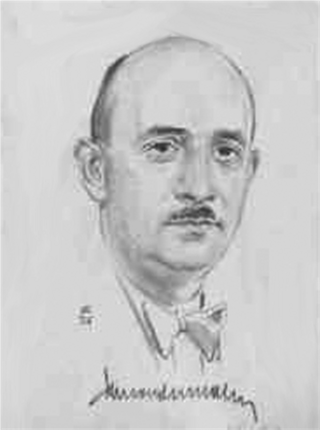
Personalia
Born:
Died:
Profession:
Persecution:
Imprisonment March 12, 1938 – May 24, 1938,
Dachau Concentration Camp May 24, 1938 – September 27, 1939,
Flossenbürg Concentration Camp September 27, 1939 – spring 1940,
Expropriation 1940,
Employment ban 1940,
Gau ban 1940
KZ Number:
Memberships
Curriculum Vitae
Ignaz Tschurtschenthaler, a native of the Gailtal valley, was sent to the Marianum Episcopal Boys’ Seminary in Klagenfurt on the advice of his elementary school teacher. Since he did not feel called to the priesthood, he left the seminary at the beginning of high school and completed his high school education as a non-resident student. The top student earned his living by giving private lessons and selling eggs. He joined the Karantania Klagenfurt secondary school fraternity and, in the winter semester of 1908–09, initiated the founding of the Gothia (now Babenberg) secondary school fraternity for students at the Realschule. These activities disrupted the previously unchallenged dominance of the liberal and pan-German secondary school fraternities in Klagenfurt. Ignaz Tschurtschenthaler faced hostility from the radical-liberal faculty and was expelled from the high school six weeks before his graduation exams. In connection with this and the “exposure” of his two fraternities, he brought a defamation lawsuit—which attracted attention throughout Austria—against the professor and state parliament representative Dr. Hans Angerer (1871–1944). Thanks to the intervention of Minister Dr. Albert Gessmann (1852–1920), Ignaz Tschurtschenthaler was ultimately able to take his high school graduation exam at the Stiftsgymnasium in Klosterneuburg in 1909. He then went to Graz to study law. In 1909, he became a member of the Traungau Graz student fraternity. After earning his doctorate in 1913, he decided to pursue a career as a lawyer, serving as a law clerk in Innsbruck and Klagenfurt, where he opened his own law firm in 1925.
Ignaz Tschurtschenthaler was also active in the Christian Social Party [CSP]; he served as a municipal councilor in Klagenfurt from 1926 to 1934 and, briefly in 1934, as a member of the Federal Council. He also served as president of the Disciplinary Council of the Carinthian Bar Association. During the National Socialists’ July Putsch in 1934, he and his wife narrowly escaped an assassination attempt. From 1934 to 1938, he represented Carinthia in the State Council.
At the time of the Anschluss, Ignaz Tschurtschenthaler was arrested by the National Socialists on the night of March 12, 1938, and taken to the Klagenfurt police jail. The SA occupied his residence and set up their office there; his bank accounts were frozen (withdrawals were possible only with Gestapo approval), and his lakeside home was confiscated for use by SS leaders. Without any interrogation or trial, he was transferred from police custody to the Dachau concentration camp on May 24, 1938, and then to the Flossenbürg concentration camp on September 27, 1939; he was released to Klagenfurt, seriously ill, presumably in the spring of 1940. [Whether he was released directly from Flossenbürg or only after being returned to Dachau is not clearly evident from the DÖW records.]. He was barred from practicing his profession and from entering the Gau, and his name was struck from the list of attorneys. After just two days, he was forced to leave his hometown. He then went to Vienna. Following a convalescent stay of several months at a sanatorium in Baden, he began training as a building manager and tax consultant and, for this purpose, also studied at the University of International Trade, where he graduated with a degree in economics in 1944.
In October 1942, he was licensed as a tax consultant. He was required to report to the Gestapo weekly and had to repeatedly fight for various work permits to make ends meet. On the night of March 19, 1945, he returned to Carinthia and went into hiding in his Klagenfurt apartment until the British entered the area.
After the war, Ignaz Tschurtschenthaler resumed his legal practice. His house (the SA office) was occupied by the British for two years. As a result, he was forced to set up his law office and his apartment in temporary quarters. He helped found the provincial ÖVP. From 1945 to 1949, he was elected to the National Council, and in 1950 he was appointed an alternate member of the Constitutional Court.
Places
Persecution:
Residence:
Citations
Krause, Peter/Reinelt, Herbert/Schmitt, Helmut (2020): Farbe tragen, Farbe bekennen. Katholische Korporierte in Widerstand und Verfolgung. Teil 2. Kuhl, Manfred (ÖVfStG, Wien) S. 361/362.; Photo: ÖVfStg