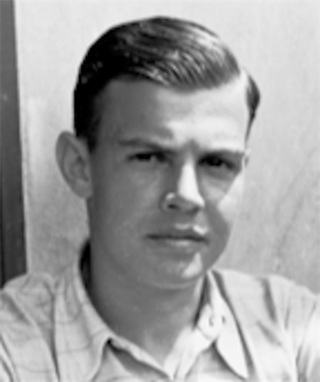
Dr. Alfred Hirsch
Personalia
Born:
Died:
Profession:
Persecution:
Reichenau Labor and Re-education Camp, April 25, 1945 – May 2, 1945,
death sentence
Memberships
Curriculum Vitae
Alfred Hirsch attended the humanities track at the Staatsgymnasium on Angerzellgasse in Innsbruck. Together with his classmate and future fraternity brother Eduard Grünewald, he secretly distributed leaflets bearing pro-Austrian slogans and symbols of the Ständestaat. On the Nordkette, they lit forbidden Sacred Heart bonfires. Using chalk, they scrawled anti-Nazi slogans on buildings and building entrances to make it clear to the public that not everyone was a Nazi.
After graduating from high school, he began his medical studies in Innsbruck in 1942, having been declared “unfit for military service” with the help of his father’s acquaintances and friends from the resistance. He became involved with the KHG—a group that was “barely tolerated” and under surveillance by the Gestapo—where he also met Christoph Probst (1919–1943) of the “White Rose” group. As a student and member of the mountain rescue service, he was able to move relatively freely and without supervision throughout Tyrol. He served as a courier for several resistance groups and distributed the “White Rose” leaflets and the sermons of Bishop Clemens August Graf von Galen (1878–1946) of Münster. On March 17, 1944, he was admitted to the Alpinia Innsbruck student fraternity, which had been founded underground in 1940.
Toward the end of the war, Franz Mair (1910–1945), an English teacher at the Akademisches Gymnasium in Innsbruck, founded the Mair-Grünewald resistance group, which was also joined by Alfred Hirsch and other members of the Alpine Corps. Among other activities, this group published a small magazine that carried news from abroad and reported on the struggles of resistance movements both within and outside Austria.
Between the fall of 1944 and the spring of 1945, the various resistance groups scattered throughout Austria and Tyrol were organized and equipped under the symbol 05 [for Austria: 0 and e = the 5th letter of the alphabet]. Alfred Hirsch and the other Tyrolean resistance fighters were in direct contact with the main 05 headquarters in Innsbruck [Andreas Hofer Str. 42]. From there, they established contact with the “Austrian Liberation Committee” in Zurich and with the Allied intelligence services. In his parents’ apartment, Alfred Hirsch hides Nowacek from Vienna, a CIA agent who maintains radio contact with the Allies from there and passes on important information to them. [He is shot by the SS on the Kemater Alm near Innsbruck in the final days of the war].
Following the exposure of several fringe groups within the resistance, the Gestapo began carrying out arrests and interrogations starting on April 21, 1945. On April 25, 1945, Alfred Hirsch was also arrested by the Gestapo along with other resistance members who had been betrayed and was brutally beaten at their headquarters on Herrengasse. They were subsequently transferred to the Reichenau Labor Education Camp [AEL], where they were to be executed. Gauleiter Hofer (1902–1975) intended to have them hanged on Rennweg in Innsbruck in early May as a deterrent. On May 2, 1945, following the surprise escape of the SS and Gestapo leadership, they were freed by a resistance group composed of members of the police and the Wehrmacht. The next day, Alfred Hirsch and Eduard Grünewald stormed the high-rise building of the Innsbruck municipal utilities on Salurnerstraße and, under heavy fire—likely from SS units—hoisted the red-white-red flag on the roof. This was intended to serve as a signal to the Allies that hostilities had ended, so that Innsbruck would be spared from bombing. Starting around 2:00 p.m., Alfred Hirsch took part in the occupation of the Tyrolean Landhaus—the headquarters of the Nazi regime. Shortly after 3:00 p.m., a red-white-red flag is also raised on the balcony of the Landhaus on Maria-Theresien-Straße. Meanwhile, the broadcasting facilities in Aldrans have also been captured without significant resistance. From there, Eduard Grünewald is able to announce the liberation of Innsbruck to the public. The final combat operations involving advancing motorized SS units, during which
Franz Mair was seriously wounded; the fighting ended around 5:00 p.m., and Innsbruck was finally in the hands of the resistance movement led by Karl Gruber. Franz Mair succumbed to his gunshot wounds on May 6, 1945.
After the war, Alfred Hirsch completed his studies and trained as a pulmonologist.
Places
Residence:
Citations
Krause, Peter/Reinelt, Herbert/Schmitt, Helmut (2020): Farbe tragen, Farbe bekennen. Katholische Korporierte in Widerstand und Verfolgung. Teil 2. Kuhl, Manfred (ÖVfStG, Wien) S. 124/125.; Photo: ÖVfStg