Oberst Karl Kraus
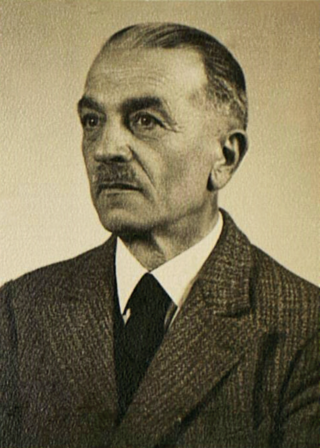
Personalia
Born:
Died:
Profession:
Persecution:
Imprisonment Feb. 4, 1939 – Apr. 4, 1939,
Imprisonment Apr. 25, 1939 – Oct. 14, 1939
Honors:
Military Merit Cross, 3rd Class, with Knight’s Cross and Swords
Bronze Military Merit Medal
Silver Military Merit Medal
Karl’s Military Cross
Silver Medal of Honor for Services to the Republic of Austria
Gold Medal of Honor for Services to the Republic of Austria
Memberships
Curriculum Vitae
Karl Kraus was born in Prödlitz, Moravia [today: Brodek u Prostějova in the Czech Republic], the legitimate son of Johann Kraus and Maria Anna, née Holzer. After elementary school, he attended the lower grades of high school in Mährisch Schönberg [today: Šumperk in the Czech Republic] and subsequently the Infantry Cadet School in Königsfeld in Brünn [today: Královo Pole in Brno, Czech Republic], where he graduated in 1901.
On July 18, 1901, Karl Kraus enlisted in the Austro-Hungarian Imperial and Royal 10th Infantry Regiment “Gustav V. King of the Swedes, the Goths, and the Wends,' was promoted to second lieutenant on November 1, 1902, and to first lieutenant on May 1, 1905. On November 9, 1911, he married Helene Singer in Banja Luka and later became the father of two sons. With the outbreak of World War I, he was promoted to captain on November 1, 1914, and served in various theaters of war, where he was wounded, resulting in the stiffening of three fingers.
As a soldier, Karl Kraus witnessed the defeat of Austria-Hungary, the collapse of the dual monarchy, and the expulsion of the House of Habsburg. He was not demobilized; instead, he was promoted to major on November 1, 1920, and to lieutenant colonel on January 1, 1921. On May 28, 1921, he was officially transferred to the newly founded Austrian Federal Army. He was assigned to the 1st Bicycle Battalion, based in Knittelfeld in Styria, while his family lived in Vienna. In 1921, one of his sons died.
In 1925, a rift developed between him and his wife, prompting him to move to Knittelfeld. However, he did not report this to army headquarters and continued to receive a housing allowance for maintaining two separate households. In 1930, a son born out of wedlock was born. In 1931, he was transferred to Wöllersdorf. In 1932, Karl Kraus divorced his wife, converted to the Old Catholic faith, and married Frieda Weil, who lived in Wiener Neustadt in Lower Austria. [Note: The child born out of wedlock was not from his relationship with Frieda Weil.] This marriage remained childless.
The 1st Cycling Battalion was stationed in Knittelfeld and Wöllerdorf. As battalion commander, he subsequently took part in the military suppression of the Socialist February Revolt in February 1934. When the National Socialists attempted a coup in Austria in July 1934, during which Chancellor Engelbert Dollfuss was assassinated, his battalion played a key role in fighting the National Socialists in Styria and Carinthia. That same year, he was promoted to colonel.
During the processing of his retirement (Karl Kraus retired on March 31, 1935), it came to light that he had wrongfully received an allowance for maintaining two households, and as a result of disciplinary proceedings, he was sentenced to a temporarily reduced pension. He lived with his wife in Wiener Neustadt.
On March 12, 1938, Karl Kraus witnessed the demise of a free and independent Austria with the invasion of the German Wehrmacht. The new National Socialist rulers sought revenge against him for his role in suppressing the National Socialist coup attempt of 1934 and arrested him between February 4, 1939, and April 4, 1939, and between April 25, April 1939 and October 14, 1939. While in custody, he was severely mistreated, resulting in permanent physical injuries. Although the wrongfully claimed allowance for maintaining two households had already been dealt with under disciplinary law, he was charged with fraud and, additionally, with abuse of official authority and the seizure of weapons. He was acquitted on April 7, 1941, of these charges, which were purely politically motivated and intended to conceal the true reason for his imprisonment.
Afterward, Karl Kraus continued to live with his wife in Wiener Neustadt. In April and May 1945, he witnessed the liberation of Austria and the restoration of the Republic. He joined the newly founded Austrian People’s Party (ÖVP) and the ÖVP Association of the Politically Persecuted and Advocates for Austria. His health, already weakened by the mistreatment he suffered while in custody, deteriorated rapidly. He died at the age of 67 in Wiener Neustadt and was laid to rest at the cemetery in Vienna-Hietzing.
Places
Residence:
Citations
Wiener Stadt- und Landesarchiv (WStLA)
Österreichisches Staatsarchiv (ÖStA)
Dokumentationsarchiv des österreichischen Widerstands (DÖW)
