Dr. Paul Abel (geb. Abeles)
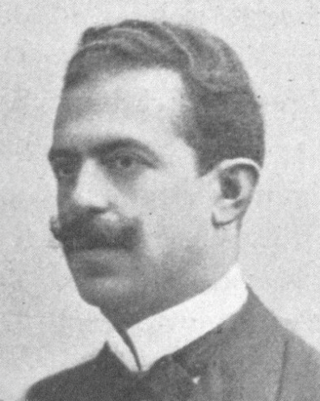
Personalia
Born:
Died:
Profession:
Persecution:
Emigration on September 29, 1938,
prohibition on employment,
Aryanization
Memberships
Curriculum Vitae
Paul Abeles was born in Vienna, the legitimate son of attorney Alexander Abeles and his wife Rosa Hermine, née Bondi. He came from a Jewish family; his father died in 1877, after which Ferdinand Bondi, a relative, assumed guardianship. After elementary school, he attended the k.k. Staatsgymnasium Wien 9 [today: Gymnasium Wasagasse], where he graduated in 1892. He changed his last name to “Abel.” In the year he graduated from high school, he enrolled in law at the University of Vienna, where he received his doctorate in law on January 18, 1899, with the distinction *sub auspiciis imperatoris*. After completing his judicial clerkship, he became a trainee attorney at the law firm of the Viennese attorney Otto Brunstein. In 1902, he married Hedwig Helene von Bachrach, the daughter of the Jewish attorney Adolf Edeler von Bachrach; the marriage remained childless. In the year of his marriage, he became a partner in his father-in-law’s law firm. The law firm and the family residence were located in the family-owned house at Rosenbursenstraße 8, in Vienna’s 1st district.
Paul Abel specialized in copyright and patent law. In 1904, he published his work *Die Rechtsgemeinschaft im Patentrecht* (The Legal Community in Patent Law); in 1908, *System des österreichischen Markenrechts* (System of Austrian Trademark Law); in 1914 *Cinematography and Copyright*, and in 1925 *Broadcasting and Copyright*. In November 1918, he witnessed the defeat of Austria-Hungary, the collapse of the Dual Monarchy, and the expulsion of the House of Habsburg. Subsequently, he became a member of a Masonic lodge affiliated with the Grand Lodge of Vienna [today: Grand Lodge of Austria of the Ancient, Free, and Accepted Masons]. However, records of which specific lodge he belonged to have not survived.
In 1924, Paul Abel became vice president of the Vienna Bar Association and subsequently a board member of various domestic and foreign legal societies, a member of the Higher Conciliation Office, the Appeals Board of the Vienna Provincial Finance Directorate, and the State Judicial Examination Commission for Patent Attorneys. In addition, he played a key role in drafting relevant Austrian laws, such as the trademark protection amendments of 1928 and 1934, as well as the copyright reform of 1936. The Austrian Association for Industrial Property and Copyright named him an honorary member. In 1929, his wife, Hedwig Helene Abel, passed away. He did not play a political role in the 1920s and 1930s.
On March 12, 1938, Paul Abel witnessed the downfall of free and independent Austria with the invasion of the German Wehrmacht. With the occupation of Austria, German legislation was adopted, including the “Nuremberg Race Laws,” under which he was classified as a “full Jew.” He was listed by the Gestapo as a “dangerous Freemason.” After his law license was revoked for “racial reasons,” he decided to emigrate to London. His considerable fortune, consisting of foreign currency, bank deposits, and securities, was confiscated under the “Reich Flight Tax,” and his real estate in Vienna and Mödling near Vienna was “Aryanized.”
On September 29, 1938, Paul Abel left Vienna and arrived in London on October 1, 1938. In 1939, he married Fanziska “Fanny” Löwner; this marriage, too, remained childless. By a decision dated October 18, 1939, he was not interned as a German citizen following the outbreak of World War II. From then on, he worked as a consultant on international law, for example, on the drafting of Central European patent and copyright law. In 1941, he became a member of the Austrian Democratic Union, a liberal, democratic, anti-Nazi organization committed to human rights, under the leadership of Julius Meinl III.
In London, Paul Abel witnessed the liberation of Austria and the restoration of the Republic in April and May 1945, respectively. He and his wife decided to remain in London and not return to Austria. Starting in 1947, he served as an executive member of the Austrian delegation to the International Copyright Conference in Brussels.
Paul Abel retired in London and died there at the age of 97, following a brief but serious illness.
Places
Residence:
Citations
Wiener Stadt- und Landesarchiv (WStLA)
Österreichisches Staatsarchiv (ÖStA)
Archiv der Universität Wien
Kodek, Günter K. (2009): Unsere Bausteine sind die Menschen. Die Mitglieder der Wiener Freimaurer-Logen 1869 - 1938 (Wien) S. 15
Minder, Robert A. (2021): Verfolgt.Vertrieben.Ermordet. Auf den Spuren der Wiener Freimaurer ab 1932 (Wien) S. 83
Wien.Geschichte.Wiki unter www.geschichtewiki.wien.gv.at/Paul_Abel
Wikipedia unter de.wikipedia.org/wiki/Paul_Abel_(Jurist)
www.myheritage.com
