Mag. Walter Stecher
Personalia
Born:
Died:
Profession:
Persecution:
Imprisonment in Vienna, Oct. 22, 1940 – 1943,
Imprisonment in Werl, 1943 – May 13, 1945
Memberships
Curriculum Vitae
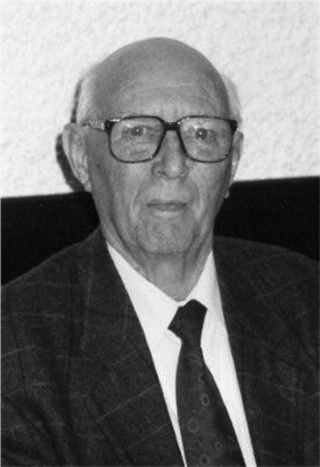
Walter Stecher moved to Feldkirch in 1917 and graduated from the Jesuit high school “Stella Matutina.” He then studied at the University of Vienna to become a teacher of Greek and Latin. During his studies, he became a member of the student corps of the “Österreichischer Heimatschutz” (Austrian Homeland Defense). At the start of the 1936–37 school year, he joined the Bundeskonvikt in Hom, Lower Austria, as a prefect and teacher. Until 1938, he led the Horn chapter of the ÖJV. Several members belonged to the Waldmark Horn secondary school fraternity, which also awarded him its sash in 1937.
A few days after the Anschluss, members of the “Studenten-Freikorps” of the Heimatschutz—among them many from the Waldmark region—were ordered by the NSDAP district leadership in Horn, under Walter Stecher’s direction, to scrub the “Austrian slogans” off the streets using buckets and scrubbing cloths. These slogans, such as “Red-white-red until death,” “Heil Austria,” and “With Schuschnigg into a Dollfuß Austria,” had previously been painted with brushes and lime on streets and walls by the ÖJV in protest against the Nazis in Horn and the surrounding areas, extending as far as Gars, Mold, and Mödring.
In early April 1938, Walter Stecher was transferred—first to Krems and then, in the fall, to Vienna—on the grounds that he was “politically unacceptable.” In April 1940, he was drafted into the Wehrmacht.
In the meantime, Walter Stecher had joined the “Austrian Freedom Movement” led by Roman Scholz, a canon from Klosterneuburg. When the resistance group was exposed to the Gestapo following a report filed on June 17, 1940, by the Burgtheater actor and informant Otto Hartmann, Walter Stecher was also arrested on October 22, 1940, and taken to prison. At his trial on December 1–2, 1943, he was sentenced by the People's Court to seven years of penal servitude and seven years of loss of civil rights “for preparing to commit high treason.” On May 13, 1945, he was liberated from the prison in Werl, Westphalia, by advancing American troops.
After the war, Walter Stecher returned to work as a high school teacher, first as interim principal of the Bundesrealgymnasium in Bludenz; from 1947 to 1968, he served as principal of the Bundesgymnasium in Feldkirch.
Places
Residence:
Citations
Krause, Peter/Reinelt, Herbert/Schmitt, Helmut (2020): Farbe tragen, Farbe bekennen. Katholische Korporierte in Widerstand und Verfolgung. Teil 2. Kuhl, Manfred (ÖVfStG, Wien) S. 333.; Photo: ÖVfStg