Hildegard Marie Führing
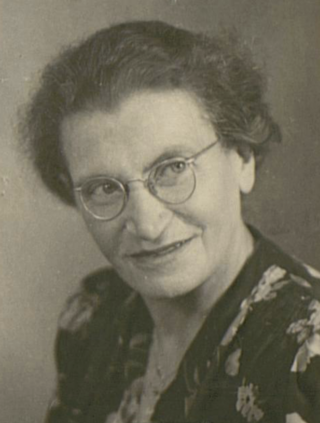
Personalia
Born:
Died:
Profession:
Persecution:
Imprisonment: August 13, 1940 – March 30, 1943
Memberships
Curriculum Vitae
Hildegard Marie Führing was born in Jaroslau in Galicia [today: Jarosław in Poland] as the legitimate daughter of Michael Führing and his wife Maria, née Oppermann. The family moved to Vienna, where Hildegard Führing grew up. After attending elementary and middle school, she graduated from a business school and, beginning in 1911, worked as a clerk [note: commercial employee] at a bank.
Even after the defeat of Austria-Hungary, the collapse of the Dual Monarchy, and the expulsion of the House of Habsburg, she remained in Vienna and worked as a clerk at a bank. In 1923, Hildegard Führing joined the Christian Social Party (CSP), but left it again in 1925.
On March 12, 1938, the devout Catholic witnessed the downfall of a free and independent Austria with the invasion of the German Wehrmacht. In January 1940, she was personally recruited by Karl Lederer to join the resistance group “Austrian Freedom Movement.” She took the oath of allegiance to the organization and paid her membership dues. In mid-March 1940, she agreed to take over the leadership of a women’s group within the resistance movement and met with Karl Lederer and other members at her apartment for this purpose.
During this time, Karl Lederer made contact with the Austrian Freedom Movement led by Roman Scholz CanReg and the Greater Austrian Freedom Movement led by Jakob Kastelic, with the aim of merging them into a single resistance movement. However, this never came to pass, as beginning in July 1940, some 300 members of these resistance groups were betrayed by the Burgtheater actor Otto Hartmann (Otto Hartmann was subsequently sentenced to life imprisonment in 1947 and pardoned in 1957), and Hildegard Führing was arrested by the Gestapo on August 13, 1940. After being detained at the Elisabethpromenade, on Schiffamtsstraße, and in Stein near Krems on the Danube, she was released on March 30, 1943. In a trial on November 30, 1944, she was sentenced to two years in prison for “preparation for high treason,” with her time in pretrial detention credited toward the sentence. Once her sentence was considered served, she was no longer imprisoned and worked as a foreign-language correspondent.
In Vienna, Hildegard Führing witnessed the liberation of Austria and the reestablishment of the republic in April and May 1945, respectively. Beginning on October 10, 1945, she worked as an interpreter for the U.S. military government. She then found work at a bank. She joined the newly founded Austrian People’s Party (ÖVP) and the ÖVP Association of the Politically Persecuted and Defenders of Austria.
She retired as a bank employee and died unmarried and childless at the age of 77 in Vienna, where she was laid to rest at the cemetery in Vienna-Gesthof.
Places
Residence:
Citations
Wiener Stadt- und Landesarchiv (WStLA)
Dokumentationsarchiv des österreichischen Widerstands (DÖW)
Friedhöfe Wien - Verstorbenensuche
