Dr. Bruno Helbig-Neupauer
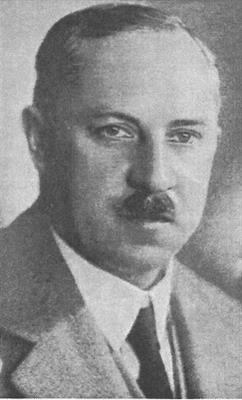
Personalia
Born:
Died:
Profession:
Persecution:
Imprisonment 23.12.1942 (several months),
Auschwitz concentration camp (short time),
Imprisonment 1943
Memberships
Curriculum Vitae
Bruno Helbig-Neupauer graduates from the Jesuit grammar school in Mariaschein [Bohosudov] near Teplitz [Teplice]/North Bohemia. He then went to Innsbruck to study theology and entered the seminary there as an alumnus. After receiving the lower orders, he broke off his theological studies, left the seminary and began studying law in Innsbruck in the winter semester of 1908/09.
In 1909, he became a member of the Raeto-Bavaria student fraternity. In the winter semester of 1909/10, he then transferred to the German Karl Ferdinand University in Prague, where he joined the Vandalia student fraternity. In 1912, he obtained his doctorate in law here. He then went to Berlin to complete his habilitation in canon law and became a member of the Suevia student fraternity. However, the outbreak of the First World War prevented him from completing his habilitation. He enlisted as a war volunteer in 1914, took part in the campaigns in Russia and Italy and was discharged at the end of the war as a retired lieutenant of artillery.
After the war, Bruno Helbig-Neupauer returned to his home country, now Czechoslovakia [CSR], where he first worked as a trainee lawyer and later as a judge in Prague. After being admitted to the bar, he later joined the internationally renowned law firm of Dr. Wien-Claudi. From 1924, he worked for the Association of German Landowners, initially as secretary, in 1929 as managing director and from 1934 as managing member of the board until the association was dissolved in 1941. In 1934, he was adopted by Baroness Neuper-Müller, since when he has had the double name Helbig-Neupauer.
After the annexation of the CSR and the establishment of the "Protectorate of Bohemia and Moravia" in 1939, the German institutions were initially able to continue working unhindered until they were dissolved in 1941. Bruno Helbig-Neupauer tries to continue the Association of German Landowners, works as a lawyer for the association, but is arrested by the Gestapo on December 23, 1942 "as an enemy of the state" and accused of being the "head of a resistance movement". After several months in police custody in Prague, Bruno Helbig-Neupauer was taken to the Auschwitz concentration camp, but was recalled thanks to the intervention of influential circles. A special court in Prague then sentenced him to a year in prison "for opposing the party and the Nazi state" and placed him under police supervision. He wrote about this in a letter dated January 5, 1948 to P. Erhard Schlund OFM (1888-1953) in Munich:
"I was arrested by the Gestapo in 1942, where I was particularly apostrophized as a representative of the Church - I represented some monasteries in a pro-right-wing way... - and as a CV representative. The interrogations at the Gestapo were the most horrible. I had to listen to almost everyone. 'You CV dog! I was sent to Auschwitz concentration camp, but was immediately sent back as a result of interventions. Otherwise I wouldn't be alive today. I was then sentenced to a year by the special court for opposing the party and the Nazi state. With God's help, I survived that too."
On June 13 and July 7, 1942, the defendant, a person of some importance in business life, met with the witnesses Winkler and Werner. In the course of the conversations, which lasted several hours and revolved mainly around political and economic issues, the accused, who had a far greater insight into the circumstances than the witnesses and had to be regarded by them as particularly credible, made a whole series of grossly inflammatory, spiteful and defeatist statements.
In particular, he spread the word that SS Obergruppenführer Heydrich had been killed by Reichsführer SS Himmler, that it was common knowledge that the top leaders killed each other. Heydrich was considered a GPU, i.e. a bloodhound. He had behaved shamefully and cowardly during the assassination attempt. What happened at the funeral was all theater.
The Führer was a fantasist who was rejected by serious people. Certain people, including the Führer, would have to step down, otherwise there would be no peace. No state wanted to make peace with him; more sensible people would have to take the helm first. The thousand-year Reich of the Germans was a dream of Hitler's.
According to the accused, the leading scientists explained that Germany was economically ruined. Grain would only be available until March, then people would get bread cards, but no bread. Goebbels was lying through his teeth, there were no laws, only arbitrariness came into consideration.
The Reich Protector decided whether a case would even come to court, a lawless situation prevailed.
The defendant also spoke of the fact that spent grains, which had previously been used as animal feed, were now needed for bread production and made the following joke:
Brewery beer for the Führer,
export beer for Hess,
bock beer for Goebbels
and thin beer for the people.
He then talked about his sales negotiations on behalf of Tepl Abbey, claiming that the abbey had only received worthless papers from the state, that the clergy would be arrested but released if they left the order. The party had its own fund to place such clergymen in civilian jobs. He also describes the conditions in the Protectorate of Bohemia and Moravia in a spiteful manner.
[...]
After a few months in police custody in Prague, Bruno Helbig-Neupauer is taken to the Auschwitz concentration camp, but can be recalled thanks to the intervention of influential circles. A special court in Prague then sentenced him to a year in prison "for opposing the party and the Nazi state" and placed him under police supervision. He wrote about this in a letter dated January 5, 1948 to P. Erhard Schlund OFM (1888-1953) in Munich:
"I was arrested by the Gestapo in 1942, where I was particularly apostrophized as a representative of the Church - I represented some monasteries in a pro-right-wing way... - and as a CV representative. The interrogations at the Gestapo were the most horrible. I had to listen to almost everyone. 'You CV dog! I was sent to Auschwitz concentration camp, but was immediately sent back as a result of interventions. Otherwise I wouldn't be alive today. I was then sentenced to a year by the special court for opposing the party and the Nazi state. With God's help, I survived that too."
I was arrested by the Gestapo in 1942, where I was particularly apostrophized as a representative of the church - I represented some monasteries in a pro-right-wing way... - and as a CV representative. The interrogations at the Gestapo were the most horrible. I had to listen to almost everyone. 'You CV dog! I was sent to Auschwitz concentration camp, but was immediately sent back as a result of interventions. Otherwise I wouldn't be alive today. I was then sentenced to a year by the special court for opposing the party and the Nazi state. With God's help, I survived that too.
In Prague, Bruno Helbig-Neupauer witnesses the liberation of Czechoslovakia, but is expropriated as a German and expelled from Czechoslovakia. He flees with his family to Vienna, where they become Austrian citizens in November 1945.
Buno Helbig-Neupauer joins the newly founded Austrian People's Party (ÖVP) and the ÖVP-Kameradschaft der politisch Verfolgten und Bekenner für Österreich and finds employment at the Chamber of Commerce in Vienna [today: Vienna Chamber of Commerce]. He later built up a new livelihood as a lawyer. He gathers the expelled Sudeten German CVers under the name 'PCV in Austria', has been chairman of the AHV of the Prague CV in Austria since 1948 and played a key role in rebuilding the original Prague student fraternity Saxo-Bavaria Prag zu Wien.
Citations
Wiener Stadt- und Landesarchiv (WStLA)
Krause, Peter/Reinelt, Herbert/Schmitt, Helmut (2020): Farbe tragen, Farbe bekennen. Katholische Korporierte in Widerstand und Verfolgung. Teil 2. Kuhl, Manfred (ÖVfStG, Wien) S.117/118.
Biolex des ÖCV unter www.oecv.at/Biolex/Detail/12900094
www.myheritage.com