Hofrat Mag. Ulrich Sattler
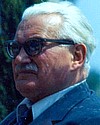
Personalia
Born:
Died:
Profession:
Persecution:
Escaped in 1938,
Imprisoned from late March 1938 to June 1938,
Released in 1938,
Resistance fighter (undetected)
Memberships
Curriculum Vitae
Ulrich Sattler, the son of a farmer, attended high school in Györ (Raab), where he graduated in the year Burgenland was annexed by Austria. He then studied law in Vienna and joined the Kürnberg student fraternity in Vienna in 1922. Enthusiastic about the student fraternity movement, he—having come into contact with the Ostaricia secondary school fraternity in Vienna—founded the Asciburgia Oberschützen secondary school fraternity in Burgenland in 1922 and the Arminia Mattersburg secondary school fraternity in 1933. In 1925, he was a key founder of the Austro-Peisonia student fraternity, which became a home away from home for Burgenland students in Vienna.
After graduating, Ulrich Sattler worked as a lawyer in the Burgenland state civil service. Following the founding of the Fatherland Front, he became the state youth leader of its youth organizations for Burgenland. From 1934 to 1938, he served as a member of the Federal Economic Council as a representative of the civil service.
After Kurt von Schuschnigg’s resignation, Ulrich Sattler initially fled to Hungary, but upon his return at the end of March 1938, he was arrested by the Gestapo and remanded to the Eisenstadt Regional Court. He remained in custody until June 1938 and, upon his release, was dismissed from state service; he was also barred from leaving the district. He took a position as a building manager in Vienna. In 1942, he was drafted into the Wehrmacht and assigned to the anti-aircraft artillery (FLAK). Three months before the end of the war, he deserted as a lance corporal and became active in the resistance group led by Dr. Jakob Kastelic and Major Biedermann.
After the war, he returned to the service of the state of Burgenland, where he headed the denazification office. In 1948, he finally became a member of the Forchtenstein Eisenstadt Secondary School Fraternity, playing a decisive role in its revival following the occupation in 1955. Later, he worked for various district administrations, most recently as head of the Statistics Department, and retired with the rank of Hofrat. He was also active as a volunteer in the Austrian Trade Union Federation (ÖGB) and served in various capacities for the Austrian Cartellverband (ÖCV).
Places
Residence:
Citations
- Fritz, Herbert/Krause, Peter (2013): Farbe tragen, Farbe bekennen 1938–45. Katholische Korporierte in Widerstand und Verfolgung. (ÖVfStG, 2013), p. 499/500.