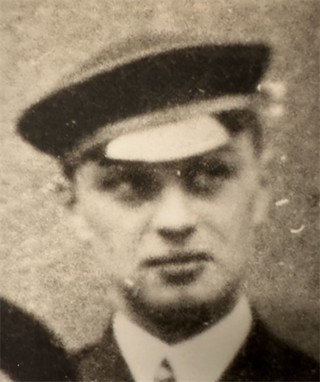
Ludwig August Krausz-Wienner
Personalia
Born:
Died:
Profession:
Persecution:
Imprisonment: Oct. 29, 1938 – Apr. 25, 1945
Memberships
Curriculum Vitae
Ludwig August Krausz came from a family in Upper Hungary that had moved to Vienna. He was born as the legitimate son of Ernst Viktor Krausz, an authorized signatory, and his wife Helene Elisabeth, née Söldner. He attended school in Vienna but interrupted his studies in 1922 to join, through the mediation of an acquaintance, the Russian Wrangel Army, which was fighting against the Communists as part of the White Army in the Russian Civil War. However, since the Russian Civil War ended shortly thereafter, he was not deployed and instead returned to school, graduating from the Humanistic Gymnasium in 1926. He then enrolled in law and history at the University of Vienna but later dropped out. During this time, he joined the Ottonen fraternity. In 1930, he adopted the double surname “Krausz-Wienner.”
Ludwig Krausz-Wienner did not hold a permanent professional position, but instead carried out occasional assignments—primarily of a genealogical nature—for acquaintances. Later, he joined the Vienna Heritage Society and the Fatherland Front. There, he worked alongside Hans Karl Frhr. Zeßner von Spitzenberg.
On the evening of the occupation of Austria, Ludwig Krausz-Wienner was present at the Ottonen executive committee meeting in the back room of Café Votiv when the group decided to formally disband and join the resistance. Within the Burian Group led by Karl Burian, he was designated as the “police chief” of the legitimist organization within the administrative district of Vienna, Lower Austria, and Upper Austria. In addition, he served as a liaison to Franz Freiherr Mac Ennis in Pressburg and Karl Fridiger in Prague.
After the resistance group was betrayed, Ludwig Krausz-Wienner was arrested by the Gestapo on October 29, 1938. He was charged with “preparation for high treason” and, at the main trial of the People's Court from December 7, 1943, to December 9, 1943, was sentenced to eight years of penal servitude. In January 1944, he was transferred from Vienna to the Straubing penal servitude facility. On April 25, 1945, they were forced to march from there due to the advancing American troops. During this march, he managed to escape with two friends in the Freising area and hide until the U.S. Army arrived.
Near Freising, Ludwig Krausz-Wienner witnessed the liberation of Austria and the reestablishment of the Republic in April and May 1945, respectively. His health marked by the severe and prolonged imprisonment, he lived in Markt Dorfen in the Erding district of Upper Bavaria. Between 1948 and 1949, he worked as a reporter at the Erding airfield, and thereafter in various professional fields, though he primarily lived as a man of independent means. From Bavaria, he joined the newly founded Austrian People’s Party (ÖVP) and the ÖVP Association of the Politically Persecuted and Advocates for Austria. It was not until the late 1960s that he returned to Vienna.

On May 9, 1978, Ludwig Krausz-Wienner founded the association “The Former Resistance Group of the Corps Ottonen,” which existed until May 10, 1985. After that, the association was renamed the “Corps Ottonen Alumni Association.” Following the deaths of Chairman Krausz-Wienner, Secretary Joseph Tischler, and Treasurer Msgr. Joseph Pinzenöler, the association was dissolved on November 9, 1992, by Othmar Burian, the son of the last senior member.
Places
Residence:
Citations
Prosl, Christian (2008): Tödliche Romantik. Das legitimistische akademische Corps "Ottonen" (Wien)
Wiener Stadt- und Landesarchiv (WStLA)
Dokumentationsarchiv des österreichischen Widerstands (DÖW)
Matricula Online