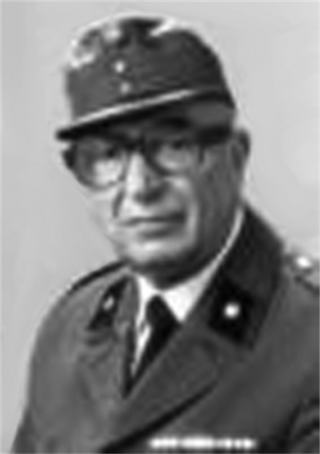
Dr. Kurt Schweizer
Personalia
Born:
Died:
Profession:
Persecution:
Imprisonment in 1938 (six weeks),
Release in 1938
Memberships
Curriculum Vitae
Kurt Schweizer initially grew up in Cattaro [Kotor in Bosnia and Herzegovina], right near the border with Montenegro, and received private tutoring. Shortly before the end of World War I, the family moved to Bolzano for safety reasons, where Kurt Schweizer attended the third grade of elementary school. Unwelcome as “enemy Austrians,” the family relocated to Teschnitz [Desnice] in the Sudetenland and from there to Innsbruck, where Kurt Schweizer completed his schooling.
After graduating from high school, he studied medicine and joined the Austria Innsbruck fraternity in 1929. After earning his doctorate in medicine (Dr. med.) in 1935, he worked as an assistant physician at the Wels Hospital.
After the Anschluss, he was dismissed and imprisoned for six weeks; afterward, he was required to report to the police every day. In October 1938, he accepted a position as the town doctor in Oberwang, and from 1941 onward, in St. Georgen. During the war, he was also responsible for caring for eleven groups of prisoners of war who were assigned to forced labor there.
After 56 years of service, he retired in 1992 at the age of 83 and passed away at the ripe old age of 102.
Places
Residence:
Citations
Fritz, Herbert/Krause, Peter (2013): Farbe tragen, Farbe bekennen 1938–45. Katholisch Korporierte in Widerstand und Verfolgung. (ÖVfStg, 2013) S. 520/521.; Photo: ÖVfStg