Viktor Pichler
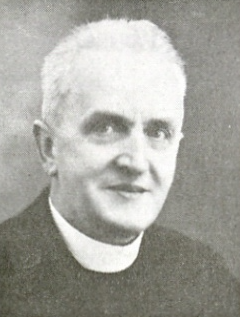
Personalia
Born:
Died:
Profession:
Persecution:
Imprisonment July 1940–July 1943,
Penal Company July 1943
Memberships
Curriculum Vitae
Viktor Pichler was born in Fladnitz, the son of master shoemaker Jakob and his wife Josefa, née Heuberger. After completing his schooling, he served in World War I and was discharged with the rank of second lieutenant. He then entered the seminary in Graz and was ordained a priest on July 2, 1922.
He subsequently served as an assistant pastor (curate) in Grafendorf, Fehring, Schwanberg, and St. Georgen ob Stiefing. In 1938, he finally became pastor in Lang, Styria.
As pastor of Lang, Viktor Pichler witnessed the fall of Austria following the invasion by the German Wehrmacht on March 12, 1938.
In July 1940, he was arrested by the Gestapo for listening to enemy radio stations (a broadcasting offense). A Special Court sentenced him to three years of penal servitude. To serve his sentence, he was transferred to various labor camps in the German Reich beginning in September 1940, including, for example, labor assignments at the Aschendorfermoor near Papenburg in the Emsland region and in Niederöfflingen near Wittlich in the Eifel region. Various petitions for clemency submitted by the Graz Ordinariate to the Reich Minister of Justice were unsuccessful. He was not released from camp detention.
In July 1943, Viktor Pichler was drafted into a penal battalion in the German Wehrmacht. He was subsequently assigned to a medical unit at the Blaubeuren military hospital near Ulm, where he was liberated by the French on May 4, 1945. He was discharged by the French as early as May 5, 1945, and, despite a leg injury, began his march home, arriving in Fladnitz on July 10, 1945.
On October 10, 1945, Viktor Pichler was appointed pastor of St. Nikolai ob Draßling. He held this position until the end of his life. He died at the Kreuzschwestern sanatorium in Graz.
Places
Place of activity:
Citations
Fritz, Herbert/Krause, Peter (2013): Farbe tragen, Farbe bekennen 1938–45. Katholisch Korporierte in Widerstand und Verfolgung. (ÖVfStg, 2013) S. 462.
Diözesanarchiv Graz-Seckau
Matricula Online