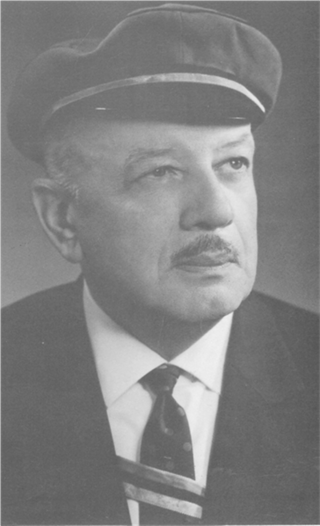
Ing. Carl Hirnschrott
Personalia
Born:
Died:
Profession:
Persecution:
Resistance fighter (undiscovered)
Memberships
Curriculum Vitae
Carl Hirnschrott, a native of South Tyrol, first attended the gymnasium in Merano and, after his family moved to Innsbruck in 1919, attended the Realschule there. In 1923, he transferred to the Higher Technical School in Innsbruck, specializing in electrical engineering. That same year, he was accepted into the Ambronia Innsbruck secondary school fraternity. In 1927, he interrupted his academic studies to complete three years of military service in the Austrian Federal Army. From 1930 to 1932, he returned to the HTL and earned his high school diploma. He then began working for the Postal and Telegraph Administration, where he was employed in the radio monitoring division. During this time, he established contacts with the Ostaricia secondary school fraternity, which awarded him its ribbon in 1935.
After the Anschluss, he was dismissed from service because of his membership in the Christian trade union and his openly patriotic stance. However, a search of his home yielded no incriminating evidence. Consequently, he was reinstated on March 22, 1938, but assigned to a lower-ranking position in the postal service. On January 2, 1939, he was transferred to Berlin and later to Gumbinnen, East Prussia. Beginning in the summer of 1943, he was assigned to the Reich Postal Central Office in Berlin.
During this time, a group of anti-Nazi postal workers, together with a larger circle of Austrians loyal to their homeland, came together under the leadership of Karl Gruber to form the Anti-Fascist Front [AGFA]. In the fall, Carl Hirnschrott became head of the Berlin-Beelitz jamming station, which was tasked with jamming German-language broadcasts from the enemy powers. There, he succeeded in replacing fanatical German officials with reliable Austrians. Thus, this office became a hub of the resistance movement, into which the jamming centers in Paris, Copenhagen, and Milan could also be integrated from Berlin.
Carl Hirnschrott performed various duties in radio monitoring and the radio jamming service. He was stationed in various locations: Berlin, Munich, Prague, Melnitz, and Beelitz-Mark, and finally in Lobenstein, Thuringia. From there, he returned to Innsbruck on April 17, 1945, where he met up with Karl Gruber at the Kreuzschwestern sanatorium. During his leave in Innsbruck in 1944, Carl Hirnschrott had already begun to establish a resistance cell within the telecommunications service, which he mobilized and expanded upon his return in 1945. This “Reichspost” group, under his leadership, was now tasked with keeping the telecommunications facilities intact and setting up an eavesdropping service. Together with his 14 colleagues, he plays a key role in occupying the Landhaus, the Reichspost headquarters, and the police headquarters in Innsbruck, as well as the radio transmitter in Aldrans, before the Americans march in. Over the Aldrans transmitter, Eduard Grünewald reads a proclamation that he repeats over and over:
“Austrians! Tyroleans! People of Innsbruck! The hour of your liberation has come. The entire Southern Front has surrendered. Allied troops are at the gates of Innsbruck. Any further resistance would not only be futile, but it is a crime against the people and the state.”
Even though the reported unconditional surrender was a deliberate false report, this call, according to Karl Gruber, had the effect of “a bright fanfare of freedom.” When the American communications officer arrived at the Post Office headquarters at 10:00 p.m. on the evening of May 3, the Resistance’s mission was accomplished and the war was over.
After the war, he worked as a presidential official at the Postal and Telegraph Administration and, from 1948 until his retirement in 1970, as a telecommunications inspector.
Places
Residence:
Citations
Krause, Peter/Reinelt, Herbert/Schmitt, Helmut (2020): Farbe tragen, Farbe bekennen. Katholische Korporierte in Widerstand und Verfolgung. Teil 2. Kuhl, Manfred (ÖVfStG, Wien) S. 123.; Photo: ÖVfStg