Univ.-Prof. Dr. Anton Emil Musger
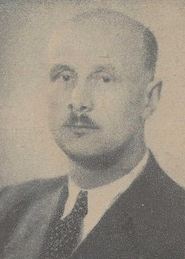
Personalia
Born:
Died:
Profession:
Persecution:
Prohibition on employment, July 23, 1940
Honors:
Austrian Medal of Honor for Science and Art, First Class
Grand Silver Medal of Honor for Services to the Republic of Austria
Memberships
Curriculum Vitae
Anton Emil Musger was born in Grieskirchen, Upper Austria, the legitimate son of Dr. Anton Musger and his wife Michaela, née Krasser. His father was a member of the Carolina Graz fraternity. His mother’s brothers were members of the Norica Vienna fraternity. His father practiced medicine in Vienna, where Anton Musger attended elementary school and then the Staatsgymnasium in Vienna-Hietzing, passing his high school graduation exam on February 1, 1917. Already the year before, on May 11, 1916, he had enlisted in World War I as part of the 3rd Heavy Artillery Regiment, in which he served until the end of the war in November 1918. By the end of his service, he held the rank of second lieutenant in the reserves.
Following the defeat of Austria-Hungary, the collapse of the Dual Monarchy, and the expulsion of the House of Habsburg, he devoted himself to studying medicine at the University of Vienna and, during his studies, joined the Second Anatomical Institute in Vienna as a teaching assistant. In 1918, he became a member of the Norica Vienna fraternity.
Anton Musger received his doctorate in December 1925 and subsequently served as a clinical fellow at the Institute of Pathological Anatomy in Vienna, as a resident physician beginning in 1926, and as an associate assistant beginning in 1927. He subsequently moved to the First University Surgical Clinic in 1928 as a resident (surgeon) and began his duties as an assistant at the Clinic for Dermatology and Syphilidology in October 1929. In 1932, he married Maria Wild and subsequently became the father of two daughters and two sons. In 1935, under Leopold Arzt, he finally obtained the venia legendi [Note: the right to teach at a university] and, in August 1936, began working as a contract physician and head of the outpatient clinic at the Empress Elisabeth Hospital.
On March 12, 1938, the devout Catholic and patriotic Austrian witnessed the downfall of free and independent Austria with the invasion of the German Wehrmacht. For the time being, the occupation of Austria by the National Socialist German Reich had no immediate consequences for him; he was still able to continue his work at the university, at the hospital, and in his private practice. Nevertheless, under the new Reich Rehabilitation Ordinance, he was required to submit an application for appointment as a lecturer under the new system—a process that effectively constituted a second “wave of purges.” Several facts now weigh against his appointment from the National Socialists’ perspective: Anton Musger is a member of the Norica Vienna student fraternity, the “Logos” Academic Association, the Christian-German Gymnastics Association “Friesen,” and the Christian-German Medical Association. The Reich Commissioner therefore describes him as “a staunch supporter of the regime,” even though he has “not particularly distinguished himself politically.” His work as an assistant physician to Leopold Arzt also works against him, as it had “secured him his position as chief physician at the Empress Elisabeth Hospital [sic!] at the time, bypassing colleagues who were at least his equal in terms of expertise.” The NSD Lecturers’ Association consequently deemed him “ideologically unsuitable,” whereupon the Reich Ministry of Education (REM) predictably rejected his application in July 1940.
At this point, Anton Musger had already been in the Wehrmacht for just under a year, having been drafted on August 26, 1939. As chief physician of the Vienna garrison hospital, he was deployed with the army “in the East” [presumably Poland, note] beginning in May 1940, and was appointed staff physician on the very day after his teaching position was revoked. He subsequently served as a military physician and chief physician in Russia for two years, worked temporarily in Paris, and in 1943 was appointed senior staff physician and head of the Neulengbach Army Hospital in Lower Austria. He was finally taken prisoner by the Americans on the Bavarian border in May 1945. There he witnessed the liberation of Austria and the reestablishment of the Republic in April and May 1945, respectively.
Anton Musger was not able to return to Vienna until August 26, 1945. On September 2, 1945, he resumed his position as head of the outpatient clinic for skin and venereal diseases at the Empress Elisabeth Hospital in Vienna, a position he had held—albeit only formally—even during his wartime service. He continued to serve in this role at the hospital until the end of 1946. Meanwhile, the State Office for Public Enlightenment also approved his readmission to the University of Vienna effective September 10, 1945. Following his appointment as tit. ao. Professor in November 1945, he assumed the position of acting head of the University Dermatology Clinic in Graz, effective May 1, 1946, and was appointed full professor of dermatology and syphilology at the University of Graz in December 1946. In addition to caring for his own children—one of whom died in 1951—he also looked after the son of his brother-in-law, who had been killed in action.
In Graz, Anton Musger rendered outstanding service, particularly in the spatial and technical development of the University Clinic for Dermatology: Among other things, he was responsible for the refurbishment and creation of new laboratories, the establishment of a slide collection for demonstration purposes, and the construction of a bathing facility. In 1949–50, he served as rector and as dean of the Faculty of Medicine during the academic years 1947–48, 1962–63, and 1963–64.
After 1946, Anton Musger was actively involved in building up Catholic Action (KA) in Styria, serving as its president for several years starting in 1953, succeeding Hanns Koren. In 1955, he became an honorary member of the Carolina Graz fraternity. This drew him into the conflict between Catholic Action (KA) and the Austrian Cartellverband (ÖCV) in the Diocese of Graz-Seckau, where the tension was particularly acute. He also established the Association of Catholic Physicians in Styria.
Anton Musger retired on September 30, 1969, after completing his honorary year. He died at the age of 85 in Lienz and was laid to rest at St. Peter’s City Cemetery in Graz.
Places
Residence:
Citations
Universität Wien - Gedenkbuch für die Opfer den Nationalsozialismus an der Universität Wien 1938
Biolex des ÖCV
Josephinum der Medizinischen Universität
Matricula Online
www.myheritage.com
